 Fraud module
  AML module
  Verifications module
 Fraud module
Detect and prevent fraud in factoring
Powered by self-learning algorithms and years of expertise, our fraud module ensures secure, reliable operations for financial institutions.
Get in touch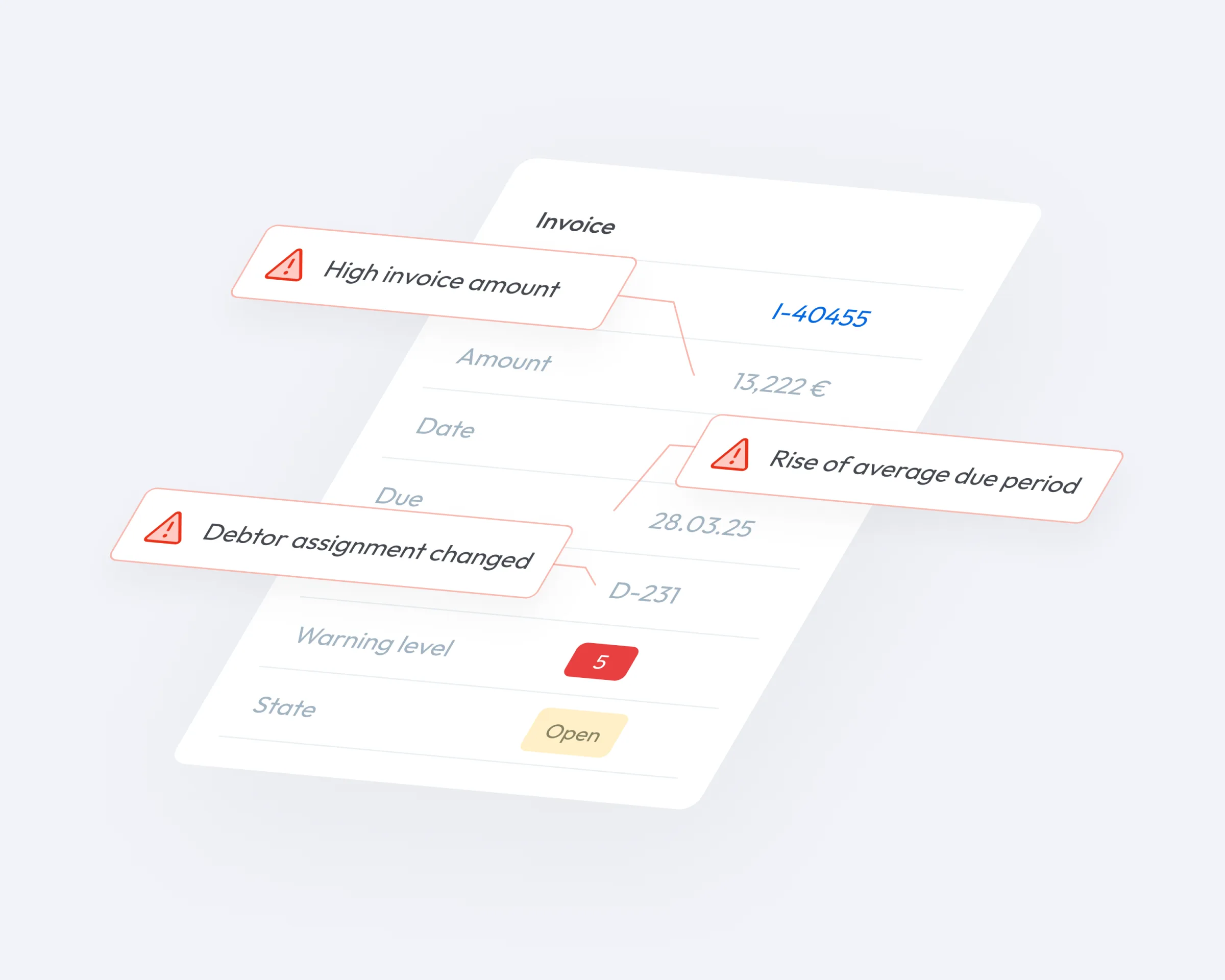
50+ different criteria
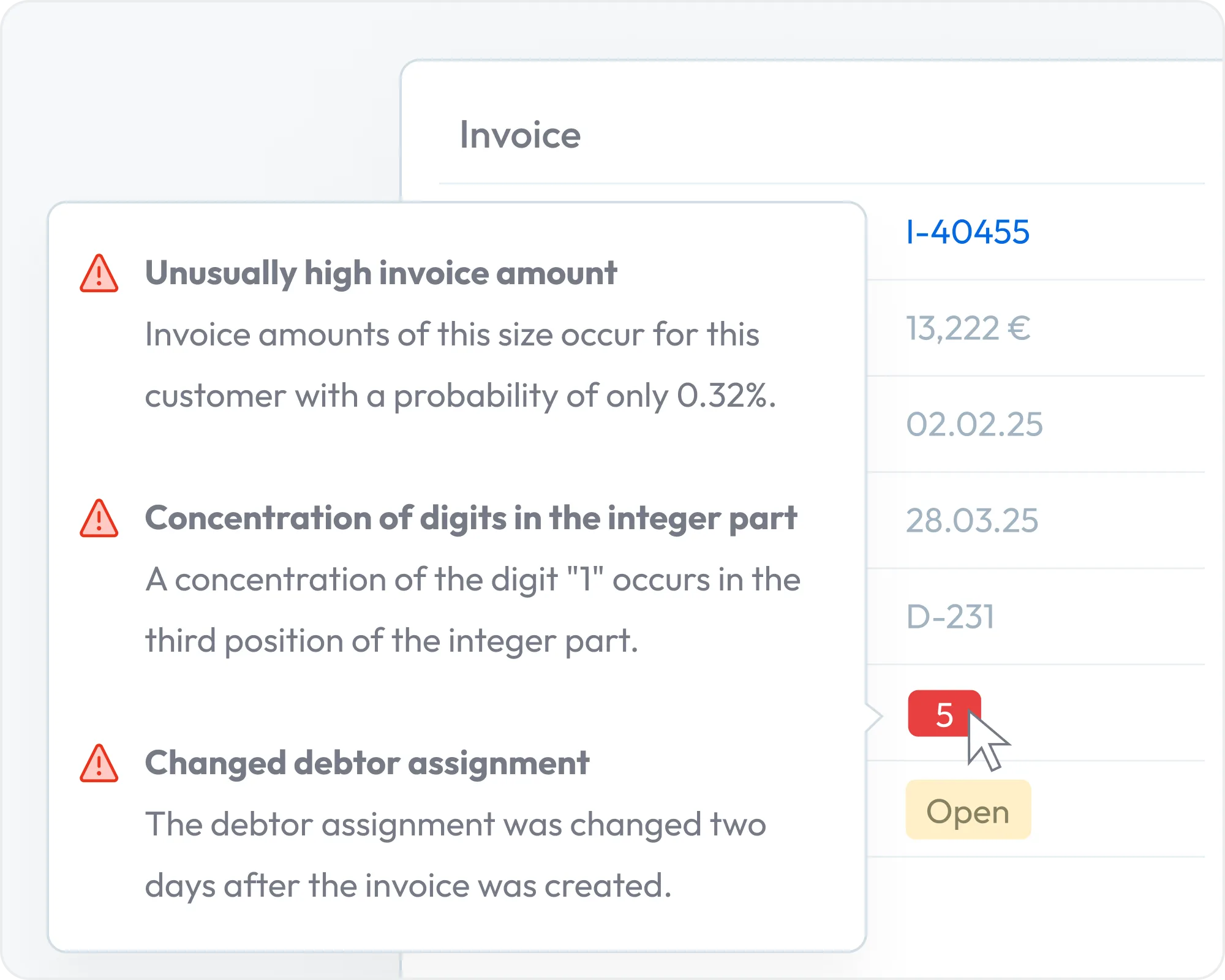
ANACONDA uses over 50 different criteria to analyze each invoice or credit note, and users can fine-tune these criteria through the settings. ANACONDA flags suspicious invoices with high warning levels and provides explanations for why they are flagged, ensuring transparency instead of a "black box" approach.
- Identify unusual patterns in amounts, dates, turnover, and debtor assignments.
- Configure globally or for specific clients to tailor fraud detection.
Prevent fraud, not only detect it
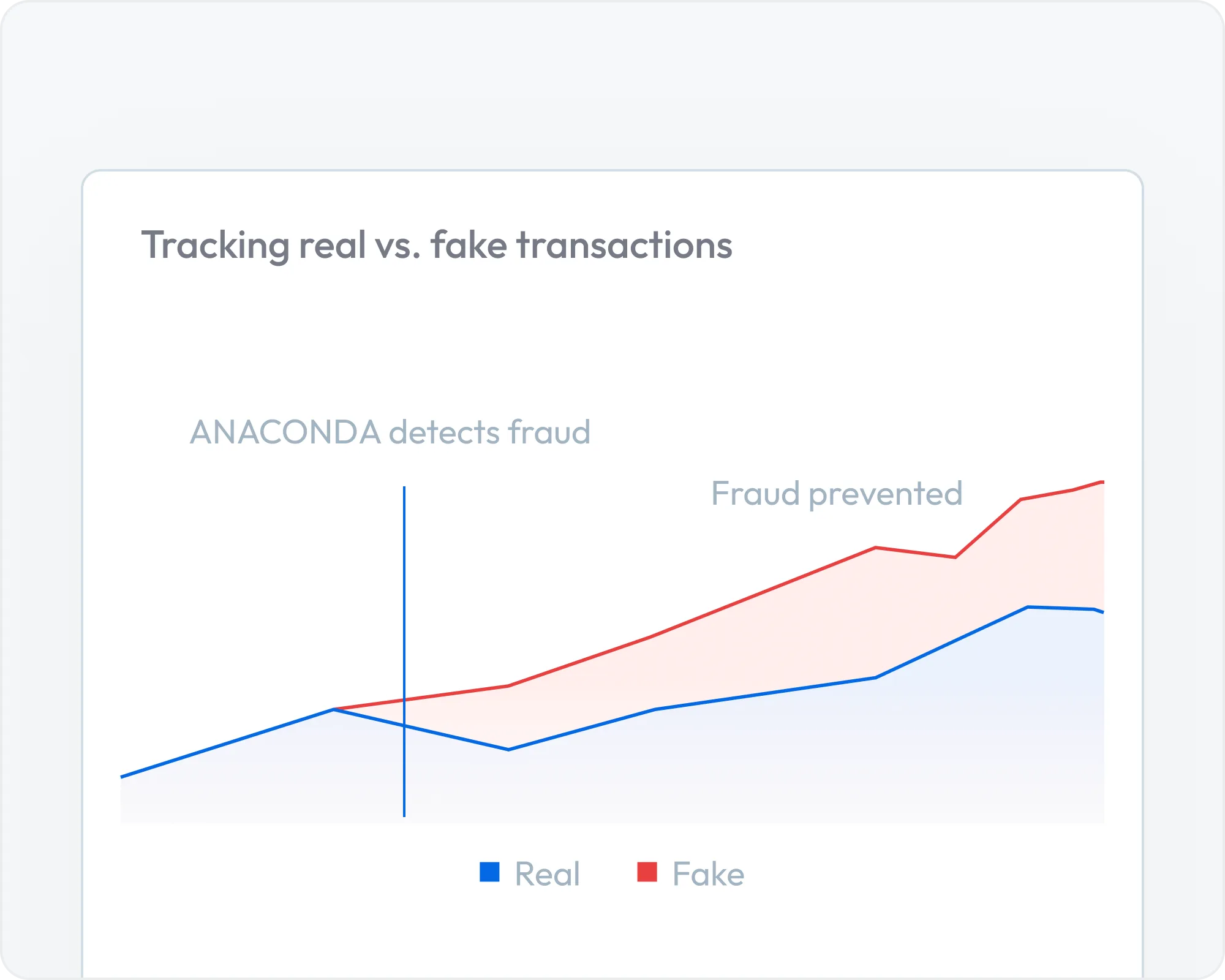
The goal is not only to detect fraud but also to prevent it. In factoring, fraud often involves multiple invoices over time rather than with a single invoice. By detecting the first suspicious invoice, ANACONDA can help prevent subsequent fraudulent activity.
- Automated identification of statistical anomalies in invoices and credit notes.
- Lower manual verification efforts while reducing fraud risks.
Self-learning algorithms
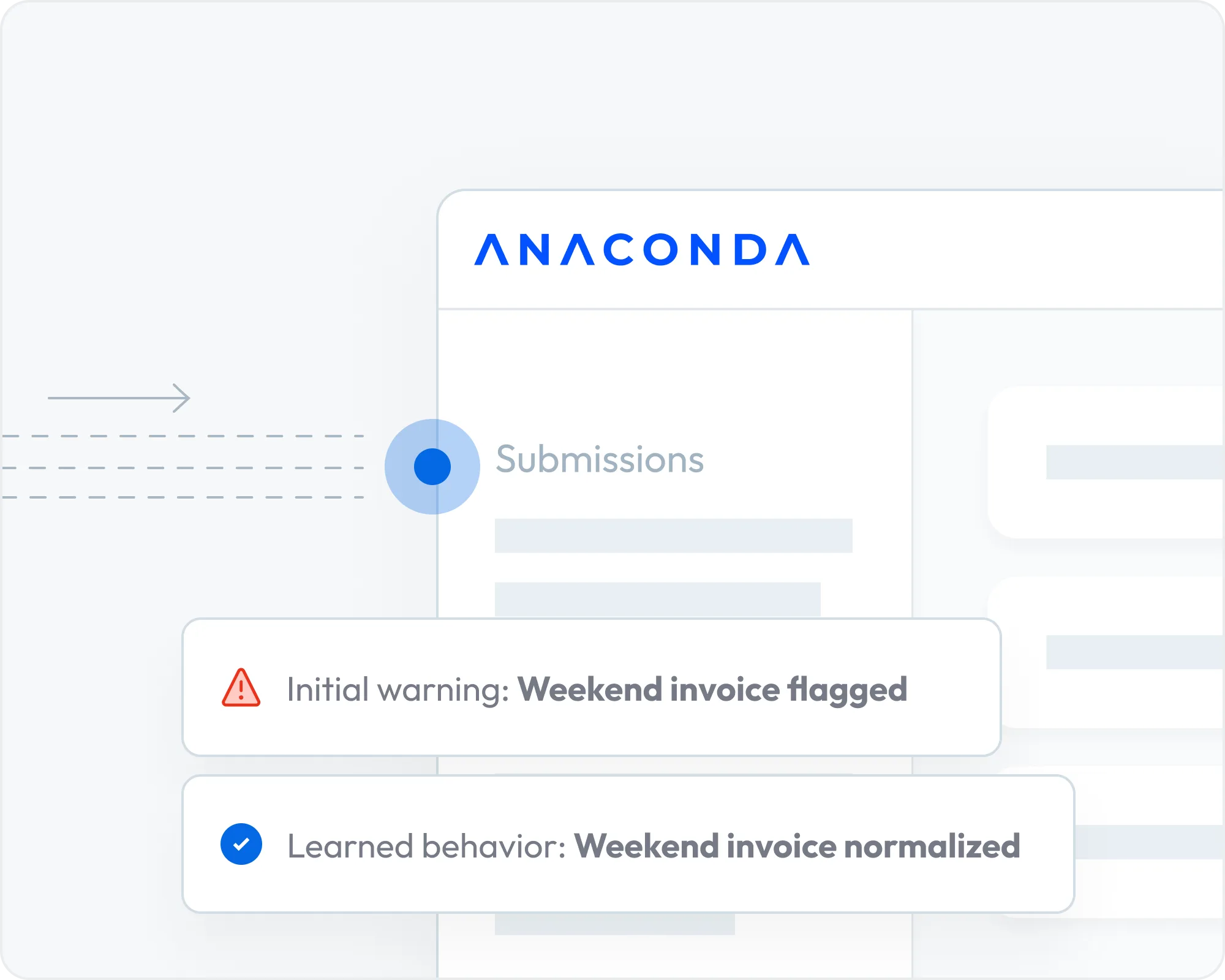
Empower fraud detection with ANACONDA's adaptive algorithms that evolve based on client behavior and historical data, reducing false alerts and improving precision.
- Establishes a digital fingerprint of typical client behavior
- Flags unusual deviations in future invoice submissions
- Optional training with historical data (e.g., from the previous year) for immediate optimization
Leverage your data
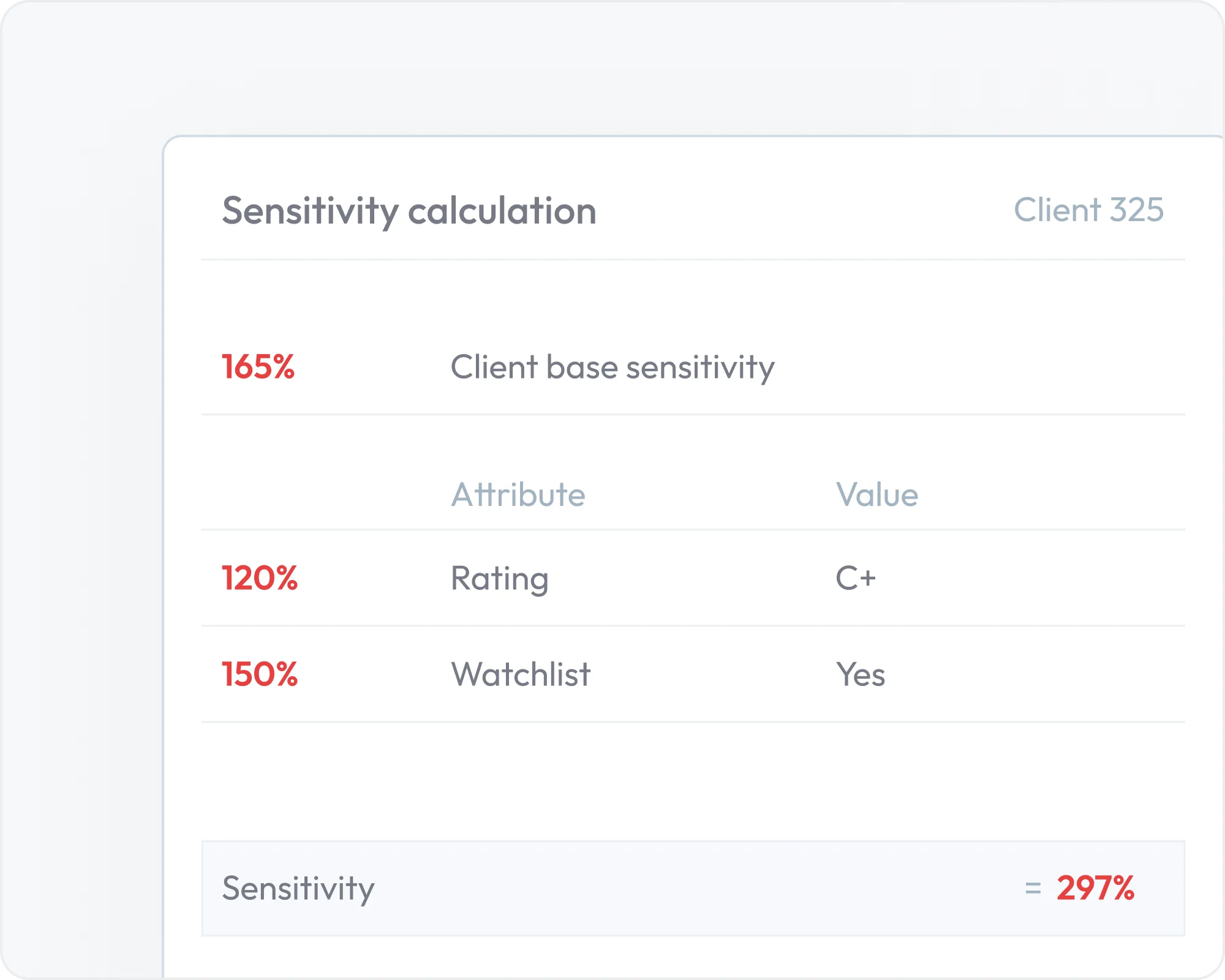
Strengthen your fraud detection processes by integrating key client data from external systems for more accurate and actionable risk insights.
- Import relevant client attributes (e.g. ratings, industry, contract type) from other systems
- Integrates these attributes for more precise risk assessments
Additional features
The fraud module uses advanced statistical and heuristic methods to detect fraud attempts by customers (sellers) in factoring. It analyzes invoices and credit notes to identify anomalies that may indicate fraud, flagging high-risk transactions for further verification, such as proof of delivery, before financing is approved. Seamlessly integrating with your systems, the fraud module offers a robust solution to safeguard your operations.

Comprehensive report
Generate detailed reports that provide insights into flagged transactions, helping you identify and mitigate potential fraud risks.

Audit trail
Maintain a clear record of all fraud detection activities with an automated log for full transparency and compliance.

User management
Easily manage team roles and permissions to ensure secure access and efficient collaboration.

Single sign-on (OIDC)
Enable secure and seamless access to the fraud module using your organization's existing login credentials.

Global solution
Adapt to local and international requirements with configurable fraud detection settings for any region.

Seamless integration
Integrate effortlessly with your existing systems to streamline workflows and enhance fraud prevention.
Trusted by leading factoring banks






Frequently asked questions
Find answers for commonly asked questions related to Fraud module.
How does the fraud module detect anomalies?
The module uses advanced statistical analysis and heuristic algorithms to examine invoices and payments. It processes data overnight to identify unusual patterns and flag suspicious activities for further review.
Can the fraud detection criteria be customized?
Yes, the fraud module allows you to customize detection criteria to align with your organization's unique requirements. You can configure risk thresholds, rules, and alerts to better match your business processes.
Does the fraud module integrate with our existing systems?
Absolutely. The fraud module integrates seamlessly with your existing financial systems, ensuring efficient data import, overnight analysis, and comprehensive reporting without disrupting your workflows.
How often is the data analyzed?
The data is analyzed daily as part of an overnight process. This ensures that any suspicious patterns or anomalies are flagged and ready for review the next day.
What happens when a transaction is flagged?
When a transaction is flagged, it is marked for further review with specific details about the detected anomalies. Alerts are generated, and the data is available for investigation, helping teams take appropriate actions to mitigate risks.
Ready to start?
Safeguard your financial operations with our advanced solutions. Detect fraud, simplify compliance, and protect your business with ease. Let's build a safer, more efficient future together.
Get in touch